You do not need a fancy gym setup to practice loaded carries. A backpack, a pair of kettlebells (or anything dense with handles), and a laundry basket are enough for a short session at home.
Today’s theme is simple: your house is already full of weights. Pick them up. Carry them tall. Put them down. That is the whole workout.
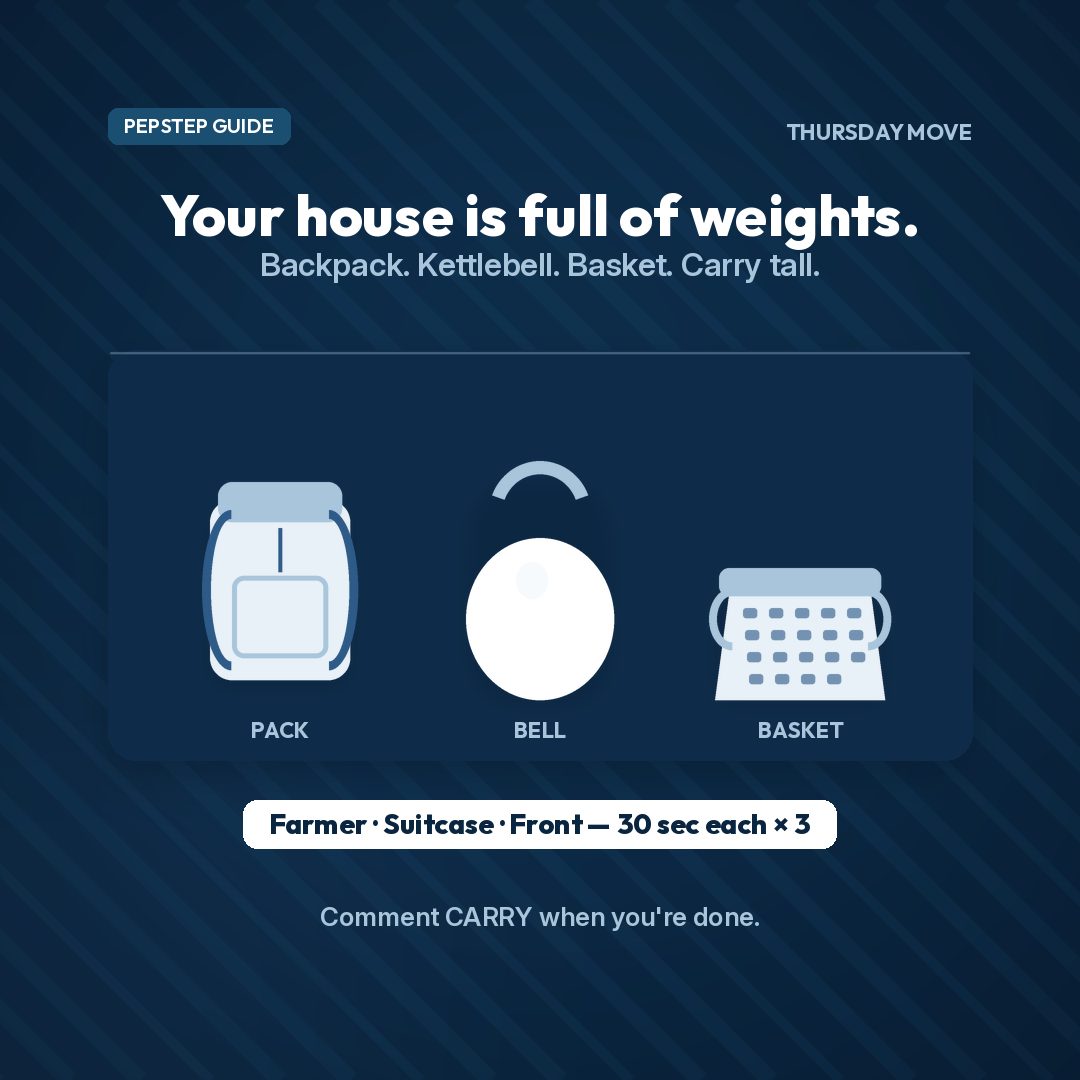
Alt text: PepStep graphic that reads “Your house is full of weights,” with backpack, kettlebell, and laundry basket icons and a farmer · suitcase · front carry pill.
Why carries fit beginners
Carries teach you to move under a light load with a steady frame. They scale easily: lighter load, shorter time, or fewer rounds when you are new. There is no complicated choreography and no special machine required.
Keep the focus on routine, not intensity. Three short carries done cleanly beat one messy max effort.
The three carries (stuff you already own)
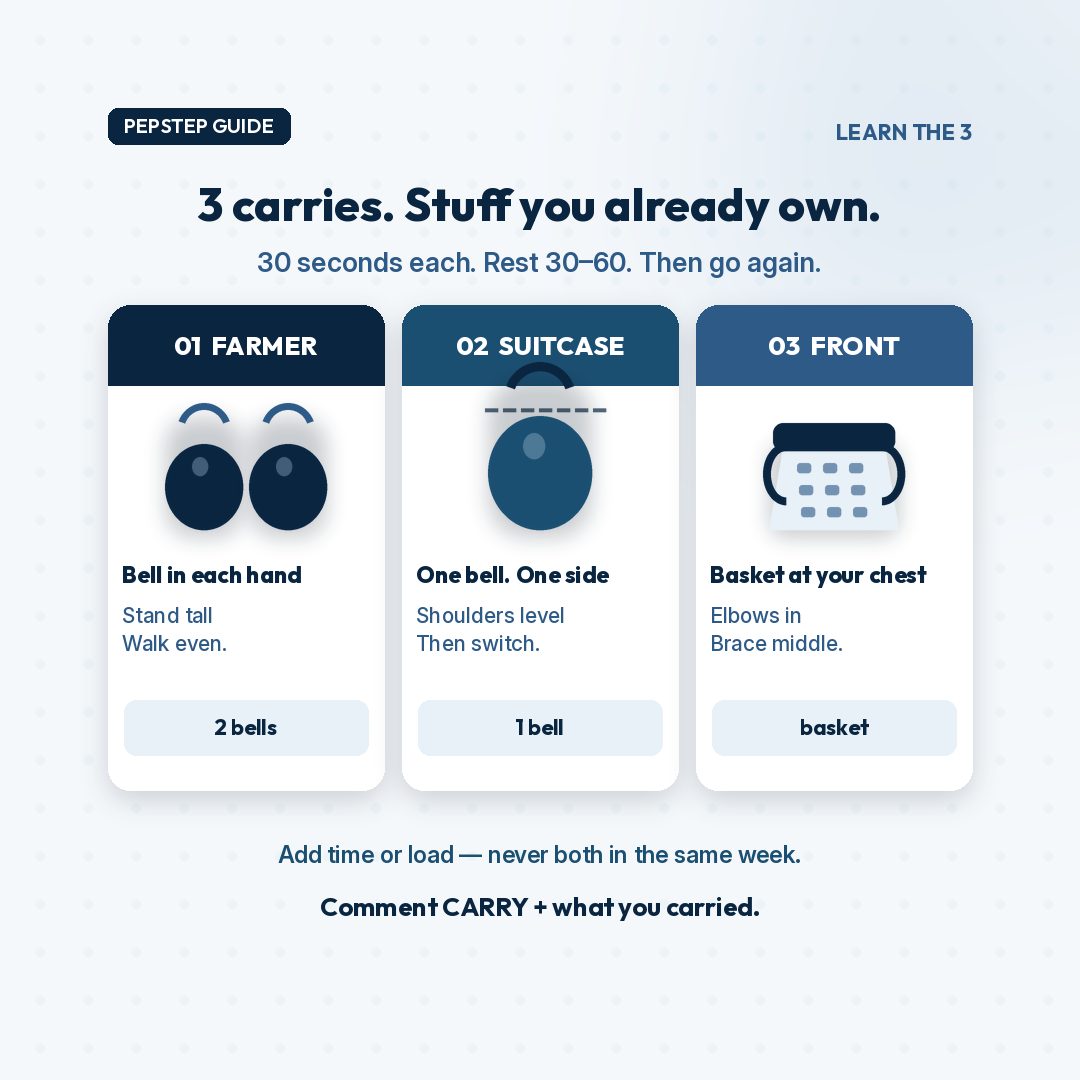
Alt text: PepStep graphic titled “3 carries. Stuff you already own,” with columns for Farmer (two bells), Suitcase (one bell), and Front (basket at chest).
1. Farmer carry — two kettlebells
Hold a kettlebell in each hand at your sides. Walk with short, quiet steps. Keep the bells close without letting them bang.
Stand-in: two filled water jugs with handles.
2. Suitcase carry — one kettlebell on one side
Hold one kettlebell in one hand and leave the other free. Resist leaning away from the load. Switch sides every round.
Stand-in: one dense backpack held by a single top handle or strap at your side.
3. Front carry — laundry basket at chest
Hold a lightly loaded laundry basket at mid-chest. Elbows stay under the basket. Walk tall without letting it drift toward your hips.
Stand-in: a soft duffel or backpack hugged at the chest with both arms.
Form cues: four locks
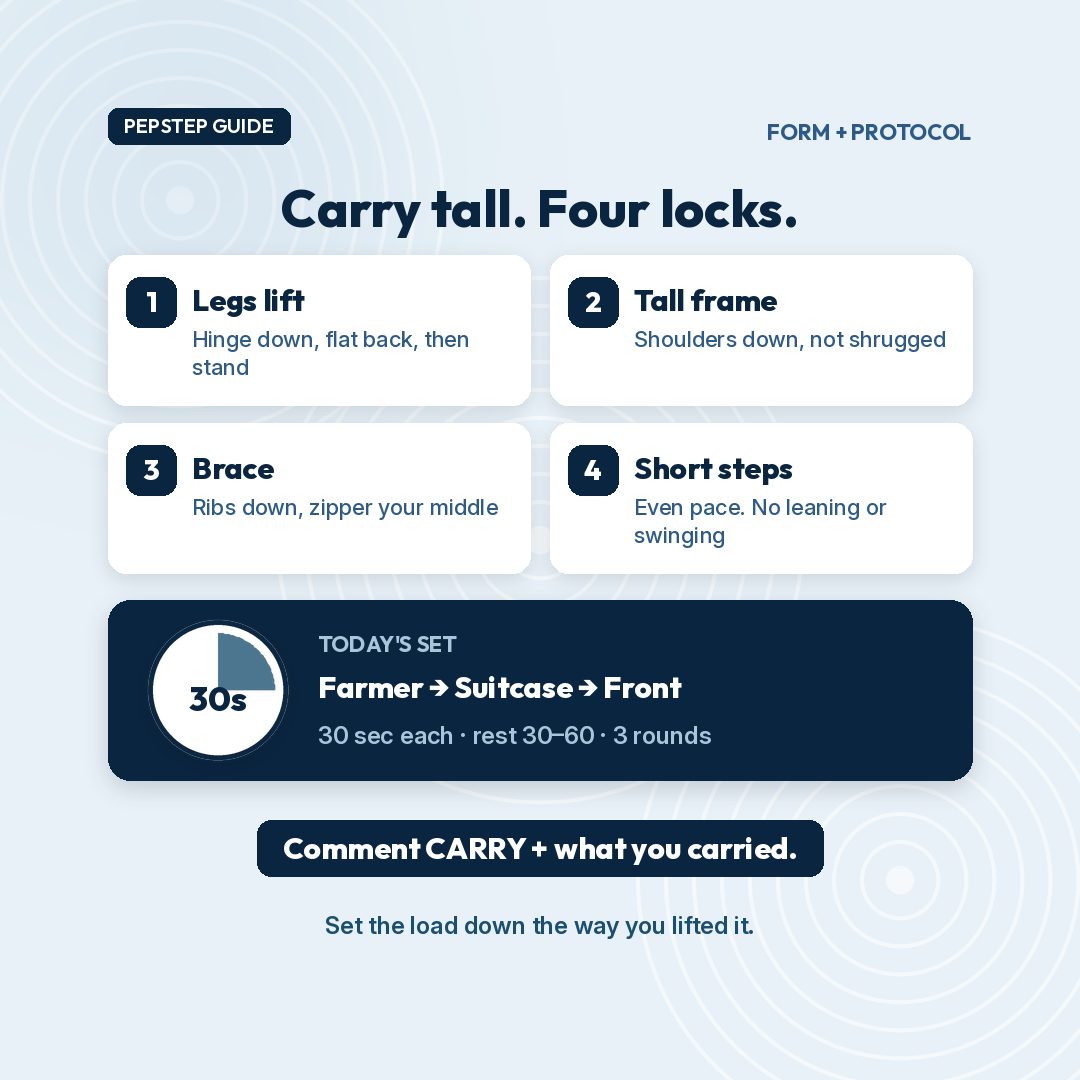
Alt text: PepStep graphic titled “Carry tall. Four locks,” showing Legs lift, Tall frame, Brace, and Short steps, plus today’s farmer → suitcase → front protocol.
- 1. Legs lift — pick the load up by bending at the hips and knees; do not yank with your lower back.
- 2. Tall frame — crown of the head up, ribs stacked over the pelvis, eyes forward.
- 3. Brace — gently firm the midsection before the first step.
- 4. Short steps — small, controlled steps beat long, wobbly strides.
If any cue breaks, stop, reset, and continue. Ending early with clean form is part of the practice.
Today’s session (about 10–12 minutes)
Clear a hallway or a short outdoor loop. Choose loads you can hold for 30 seconds with the four locks intact.
Protocol — 3 rounds:
| Carry | Time | Rest |
|---|---|---|
| Farmer | 30 seconds | 20–30 seconds |
| Suitcase (switch sides each round) | 30 seconds | 20–30 seconds |
| Front (basket at chest) | 30 seconds | 45–60 seconds before the next round |
Log what you carried so next week is honest, not guesswork. When you finish, note CARRY plus what you used — belonging makes the habit stickier than willpower alone.
Weekly progression
Stay on this structure for four weeks. Change only one variable at a time:
- Week 1: Learn the three positions. Prioritize tall frame and short steps.
- Week 2: Same times. Nudge load up slightly or shorten rest — not both.
- Week 3: Add a fourth round or stretch each carry to 40 seconds. Pick one.
- Week 4: Return to 30 seconds × 3 with the Week 2 load and notice how much smoother it feels.
Skip a day when you feel beat up. Consistency across the month matters more than any single session.
Safety notes
Keep walkways clear. Use loads with secure grips. New to exercise, returning after a long break, or managing a condition? Check with your clinician before you start. This post is general fitness information, not medical advice.
Pair the habit with PepStep tools
Stack the carry with free tools and coaching on pepstepguide.com:
- Workouts — more simple sessions to rotate through the week
- Calorie tracker — a light way to notice what you eat while the habit settles
- Online coaching — personal guidance when you want eyes on your plan
- Membership — the PepStep community and program hub
- Women’s Corner — training and support shaped for women
Curious about clinician-guided GLP or hormone programs? Those options are available with licensed clinicians (via our partner OpenLoop). A clinician decides whether any program is a fit. We do not promise specific results.
Learn more: our research education cards
PepStep also publishes research-use education cards so curious readers can see how peptides are discussed in the lab literature. These cards are for research-use education only, not for human consumption, and they are not a training tool, supplement plan, or part of this carry routine. Nothing below suggests that any compound helps with carries, recovery, or fitness.
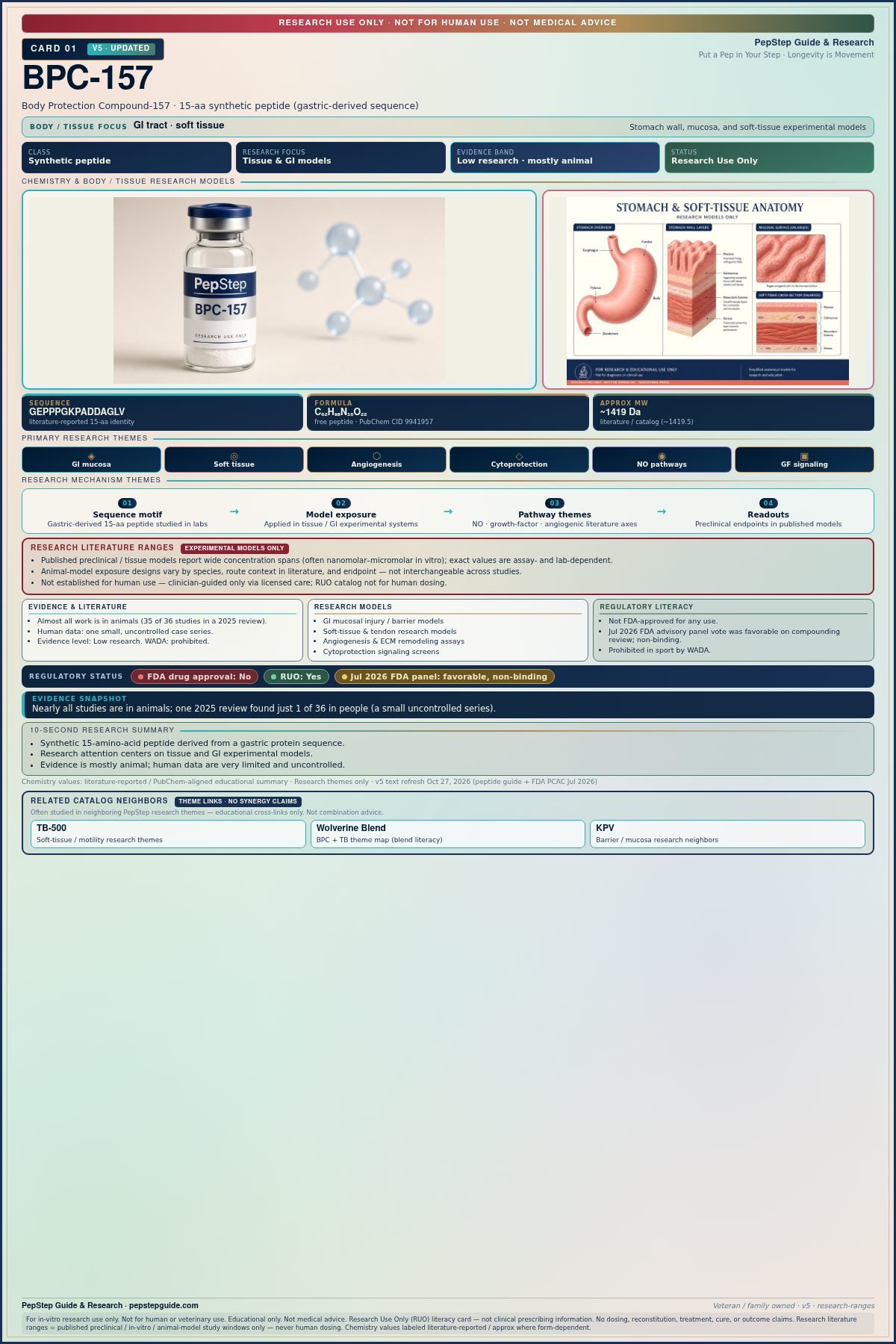
Alt text: PepStep research-use education card for BPC-157, labeled for research use only and not for human consumption.
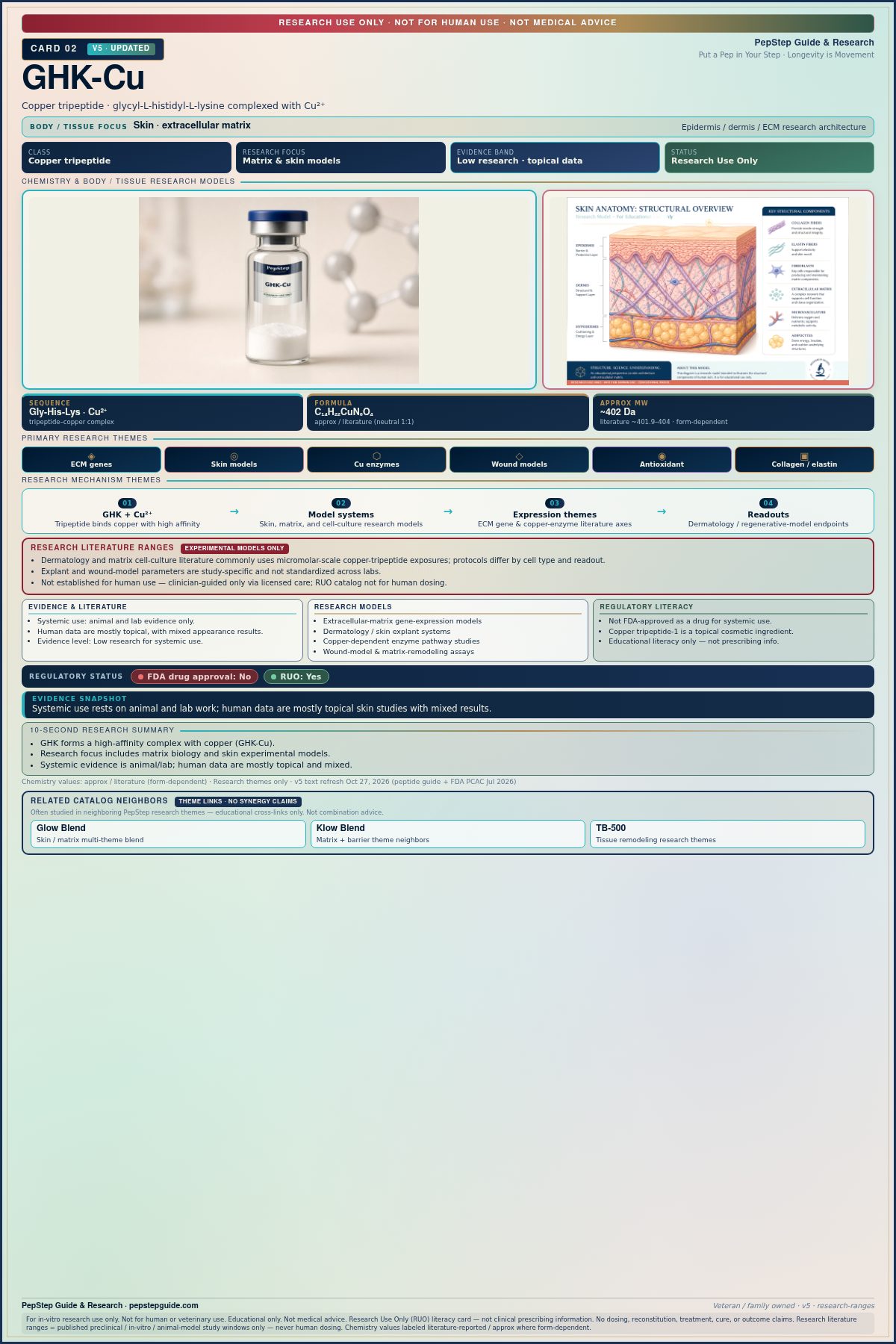
Alt text: PepStep research-use education card for GHK-Cu, labeled for research use only and not for human consumption.
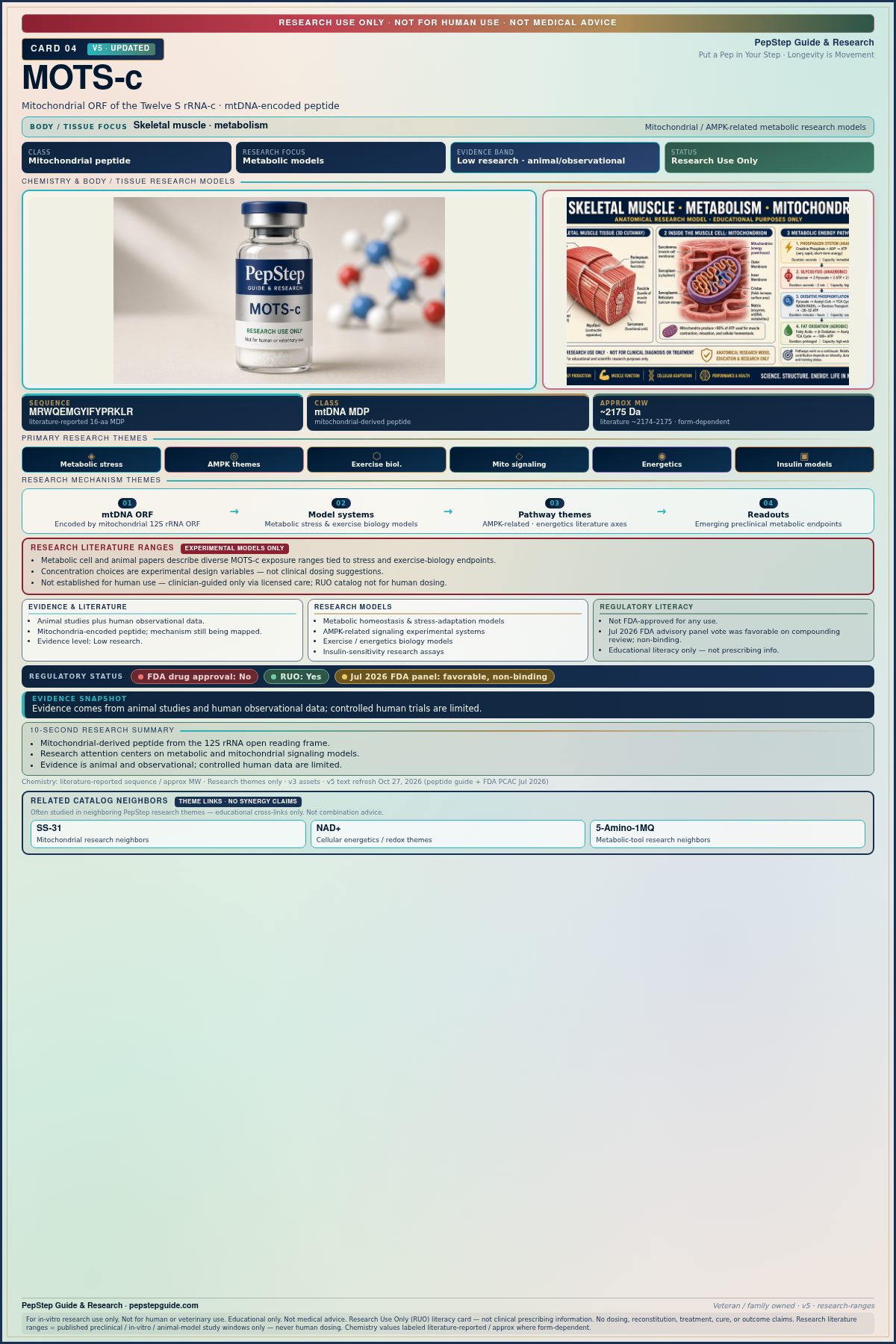
Alt text: PepStep research-use education card for MOTS-c, labeled for research use only and not for human consumption.
Treat every card as education — never as instructions for personal use.
Your next step
- 1. Pick your three props tonight.
- 2. Run farmer → suitcase → front for 30 seconds each, three rounds.
- 3. Write down what you carried.
- 4. Come back tomorrow for the next small brick.
Longevity is movement. Put a pep in your step.